
SEVENTY-SEVEN – GO AND SAVE IT!
The Gospel legacy of Hieromonk Eugenios Kastania from Provata on Mount Athos: ‘I do not say to you seven times, but seventy-seven times.’ Matthew 18:22
Your cart is empty.
The Gospel legacy of Hieromonk Eugenios Kastania from Provata on Mount Athos: ‘I do not say to you seven times, but seventy-seven times.’ Matthew 18:22
There are people who possess book learning, and there are people who, without any particular formal education, manage to convey the deeper meaning of the Gospel in just a few words.
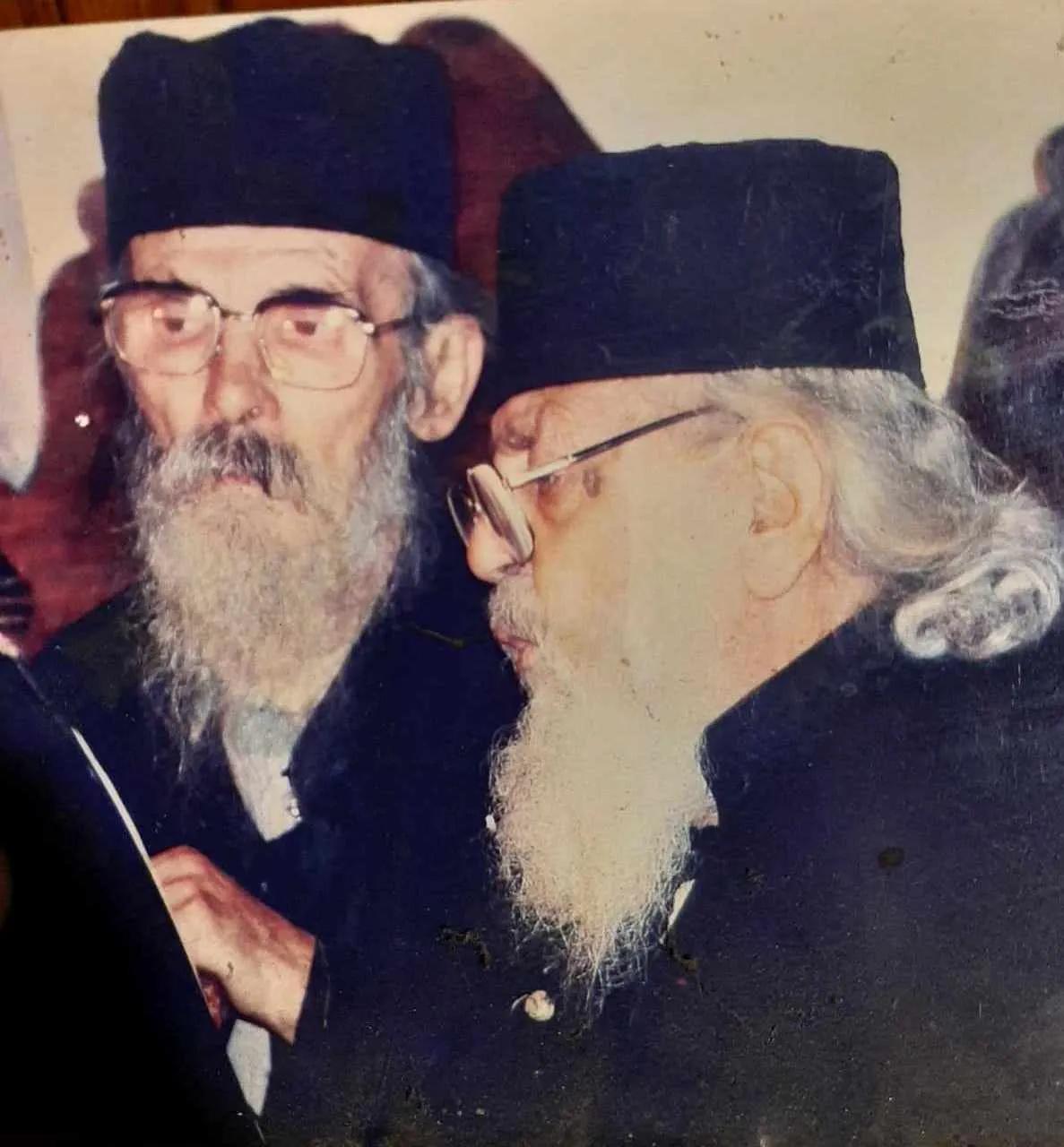
The Hieromonk Eugenios Kastanias (1914–2009), who lived for eighty-two years on Mount Athos, in the Holy Cell of the Dormition of the Theotokos ‘of Kastanias’, in Provata, a dependency of the Holy Monastery of Megisti Lavra, was barely literate.
Nevertheless, he used to repeat with particular insistence a characteristic fatherly admonition:
‘Seventy-seven sins. Repent and be saved!’
A simple phrase, almost unpretentious, yet possessing unfathomable spiritual depth.
But what did the Elder mean?
‘Seventy-seven’ refers directly to Christ’s reply to the Apostle Peter, when he asked Him how many times he ought to forgive his brother.
The number is not a numerical limit, but reveals the boundlessness of forgiveness.
The word ‘sins’ serves as a reminder of the human fall, of repeated failure, of the tragic reality of a person who, whilst desiring what is good, is often enslaved by their passions.
And ‘turn’ lies at the very heart of the entire exhortation.
Turn, that is, back to God. Return from your error. Turn your mind and heart towards Christ. Do not remain in sin, but do not give in to despair either.
Finally, ‘be saved’ does not mean that a person saves themselves on their own. It is a call to accept, through repentance, God’s saving mercy.
In this way, the Elder combined in a single phrase two inseparable Gospel truths: God’s inexhaustible forgiveness and the ceaseless need for human repentance.
Forgiveness that knows no bounds
In the Gospel according to Matthew, Peter asks:
‘Lord, how often shall my brother sin against me, and I forgive him? Up to seven times?’
Christ replies: ‘Seventy times seven.’
The Lord does not allow man to reduce forgiveness to a mere accounting exercise. There is no predetermined number of transgressions beyond which love ceases to be a Christian duty.
This is immediately followed by the parable of the unforgiving servant.
A man is freed from an unimaginably huge debt, yet refuses to forgive a comparatively insignificant debt owed by his fellow man.
This is the tragic contradiction of the human heart: it seeks God’s infinite mercy, yet finds it difficult to show mercy to its neighbour.
The parable reveals that it is not enough simply to accept forgiveness. One must allow mercy to transform the very way one lives.
Repentance as a return to the Father’s love
In the word ‘return’, a second Gospel image can also be discerned: the return of the prodigal son.
The prodigal son was not saved because he managed to erase his past. He was saved by the Father’s love when he abandoned his estrangement and returned in repentance.
In Orthodox patristic anthropology, repentance is not merely a moral correction, but a transformation of one’s very way of being.
Man abandons self-love and reorients his freedom towards God.
Sin is not cured by despair. Despair adds the rejection of hope to the fall.
Nor, however, is it cured by unrepentance, which invokes divine mercy to justify continued enslavement to the passions.
True repentance lies between these two spiritual dangers: without despair, yet without self-sufficiency.
It is precisely this balance that is implied by the fatherly exhortation of Elder Eugene.
No matter how many times you fall, do not come to terms with your fall. Get up and return.
The Mount Athos wisdom of simplicity
The spiritual tradition of Mount Athos recognises that theology is not limited to erudition.
Knowledge of the doctrines is valuable, but it does not replace the purification of the heart.
St John of the Ladder presents repentance as a renewal of baptism and reconciliation with the Lord through a practical return to Him.
In the same ascetic tradition, resentment, pride and despair are recognised as passions that damage a person’s communion with God.
What good is it to keep vigil if we refuse to forgive?
What good is it to know the Scriptures if we despise our repentant brother?
And what good is it to speak of divine charity if we regard our own fall as greater than the mercy of Christ?
True humility does not lie in a person despairing of their own unworthiness, but in acknowledging it whilst never ceasing to hope in God.
The Elder’s Legacy
The Hieromonk Eugenios Kastanias fell asleep in the Lord in 2009. Yet his simple exhortation remains as relevant as ever.
In a world that struggles to forgive, and in an age where people are at times ready to justify everything and at other times despair of everything, his words remind us of the path of repentance.
Do not count your failures more than you trust in God’s mercy.
Do not count your brother’s faults, forgetting how many times you yourself have been forgiven.
And above all, never think that the door to return has closed, as long as the possibility of sincere repentance remains within you.
With these words, the Elder was not setting out a theoretical theological system, but issuing a call to spiritual vigilance.
For salvation does not lie in the illusion that we will never fall again, but in a living relationship with Christ, Who ceaselessly calls the fallen human being to return.
And perhaps this is the deepest wisdom that a simple fatherly word can offer:
Let us not grow accustomed to sin, nor let us despair because of it.
‘Seventy-seven sins. Repent and be saved!’
Kastania – Monastic Products
In memory of Hieromonk Eugenios Kastanias (1914–2009), of the Holy Cell of the Dormition of the Theotokos ‘of Kastanias’, in Provata on Mount Athos.